


The NHS offer an overview on what periods are and how to manage your periods.
What is menstruation and what is a period?
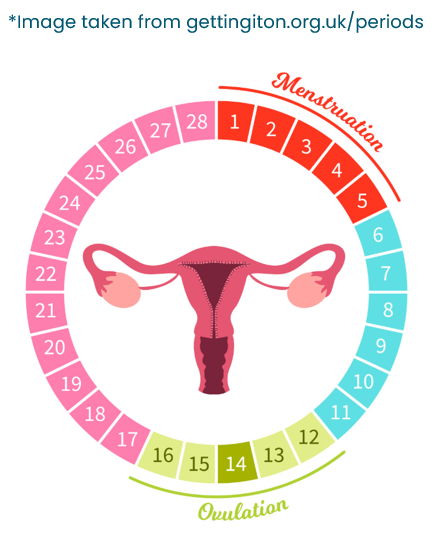
The menstrual cycle is from the first day of your period to the day before your next period. For most people this is between 21 and 35 days. It is the process your body goes through to prepare the womb for pregnancy. These changes happen every month, whether or not you are planning a pregnancy or having sex.
Menstruation or the ‘period’ is the part of the menstrual cycle where the lining of the womb sheds and vaginal bleeding happens if you don’t become pregnant. With a normal period, you can bleed for anything between 2-7 days. It is normal for you to lose up to 80 ml (up to 5 tablespoons) of blood during your period. More information is available from the Menstrual Health Project and their Complete Guide to Your Menstrual Health.
This page from the NHS explains what a period is and at the bottom of their page you will find a short video that explains the menstrual cycle.
When do periods start?
Most people start their periods when they're about 12, but they can start as early as 8 years old. This page from the NHS has more information.
Managing your period.
There can be lots of things to consider and understand when managing your period. What products to use, how to manage cramps and pain, and managing your emotions. Wellbeing of Women have this page to support teenagers with managing their period.
Red flag symptoms
Adapted from Menstrual Health Projects, Menstrual Health Guide below are symptoms that should not be ignored and advice on getting more help is below.
· Heavy period flow (e.g. changing your pad more than every one to two hours)
· Period lasting more than 7 days
· Pain when opening bowels or pain when passing stools
· Bleeding from your rectum
· Pain when passing urine
· Upper leg (thigh) pain
· Extreme tiredness
· Fainting
· Significant changes in mood or mental health
· Blood clots larger than the size of a 10p coin
Getting more help / diagnosis pathways
If you are unsure about something it is better to ask for help. You can speak to a trusted adult or see your GP.
If there is a medical condition that you need support with, diagnosis may take a long time. So, seeking support as soon as you can is advised.
Taken from Endometriosis UK: The first step to getting a diagnosis is to visit your GP. A GP cannot diagnose Endometriosis for certain, but they can offer you treatment to help with your symptoms. Your GP can also give you a referral to a gynaecologist to investigate your symptoms further.
Websites that offer more information and support
If you want more information or support, use the links below to navigate to the below organisations.


Menstrual Health Project (MHP) is a UK charity who provides educational tools, offers workplace and school sessions, and raises awareness for menstrual health conditions and related concerns.
Wellbeing of Women's work covers period problems and starting a family, to menopause and gynaecological cancers, we are here for women’s gynaecological and reproductive health.

Getting it on is the trusted sexual and mental health information and support services for young people in Southwest London