


This is paragraph text. Click it or hit the Manage Text button to change the font, color, size, format, and more. To set up site-wide paragraph and title styles, go to Site Theme.
New Paragraph
Health Messaging and Young People
“I am not going to spend my free time googling that”
From 2024, Youth Out Loud! has periodically surveyed young people to understand the kinds of information they want to learn about from health and care professionals, and how they would prefer for this information to be presented to them.
Outreach sessions:
· Kingston College Freshers Fair – 18th September 2024
· SEND Transitional (Access All Areas) – 15th October 2024
· Kingston College Freshers Fair – 17th September 2025
Across the three key outreach sessions Youth Out Loud! surveyed over 100 young people to hear a broad range of perspectives.
The initial survey was created in 2024 and was later amended to improve its accessibility for young people with a learning disability. The survey was amended again in 2025 in response to feedback to offer more choices to the original questions. The variation in survey questions makes it difficult to directly compare, contrast and collate answers from across the engagement sessions.
In May 2026 we met with students from Canbury School, an inclusive co-educational independent day school, to discuss their experiences accessing health information online. Our findings from the key outreach sessions and focus-group with students from Canbury School are presented below.
Key findings
Across the outreach sessions, we heard similar concerns and priorities from the young people we spoke to.
When young people were asked what they would like to hear more about, mental health had an average of 61% across the three pieces of outreach and good sleep had an average of 60% of the votes.
What could be categorised as making ‘healthy choices’ also scored very highly, with healthy eating having an average of 48% and exercise scoring 46% of the votes.
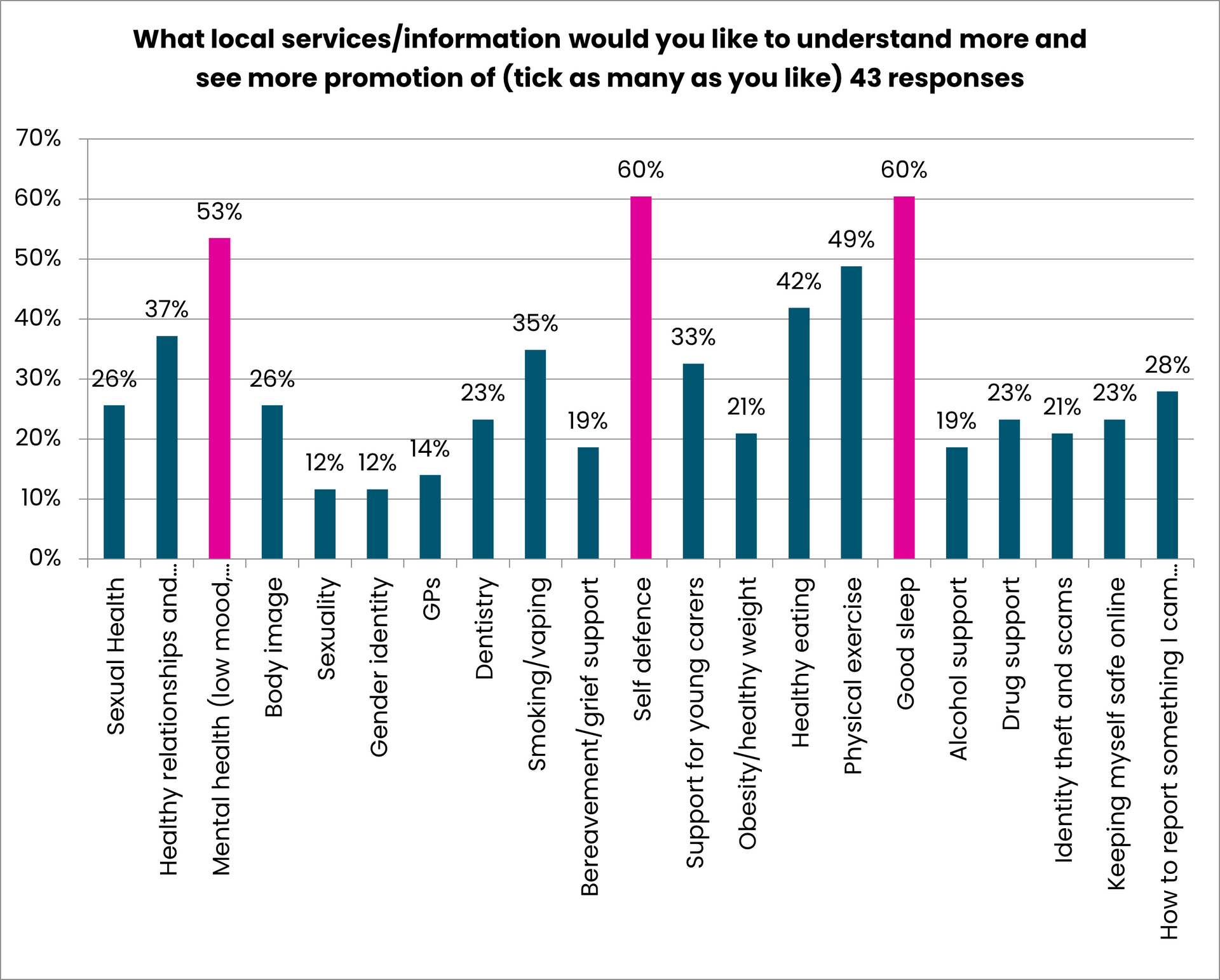
Self-defence, was not an option in the 2024 survey, but was chosen as ‘other’. When we added this as an option in 2025 it scored 60% of the votes, making it joint top with good sleep from the 43 young people that answered the question in 2025.
There is a need for the health messaging to come from professionals. Young people showed mixed feelings about receiving information online. In some cases, we heard about a distrust of online information, which might be why hearing directly from a professional scored so highly (56% across two surveys).
However, our findings indicate that young people would like both face-to-face and online information, and that more young people would like to hear information through social media than are currently receiving it that way. There is potentially more that can be done to bridge the gap between what young people want and how they currently receive information.
What we heard in 2024
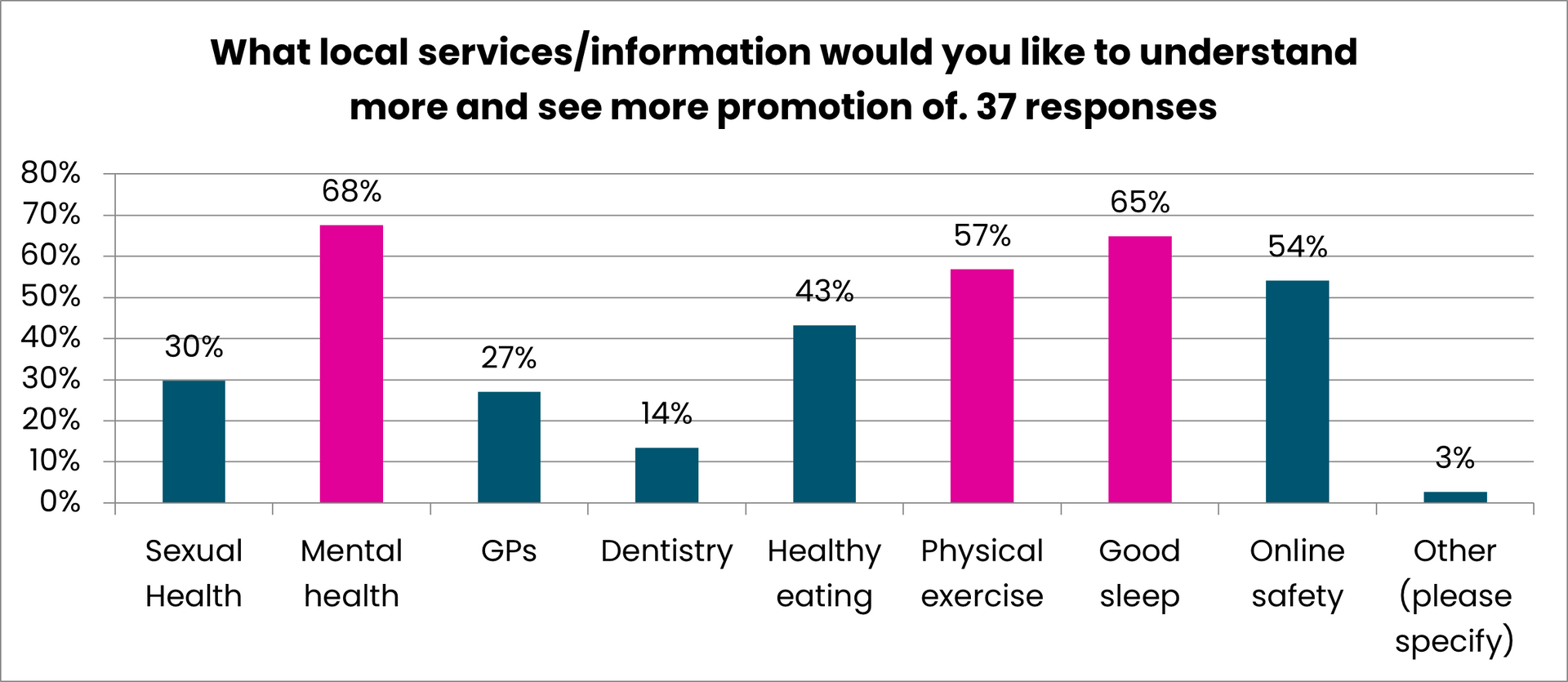
At Kingston College Freshers Fair in 2024 we asked young people what health subjects they would like to hear more about.
Mental health (68%), good sleep (65%) and physical exercise (57%) were key priorities for the young people we heard from.
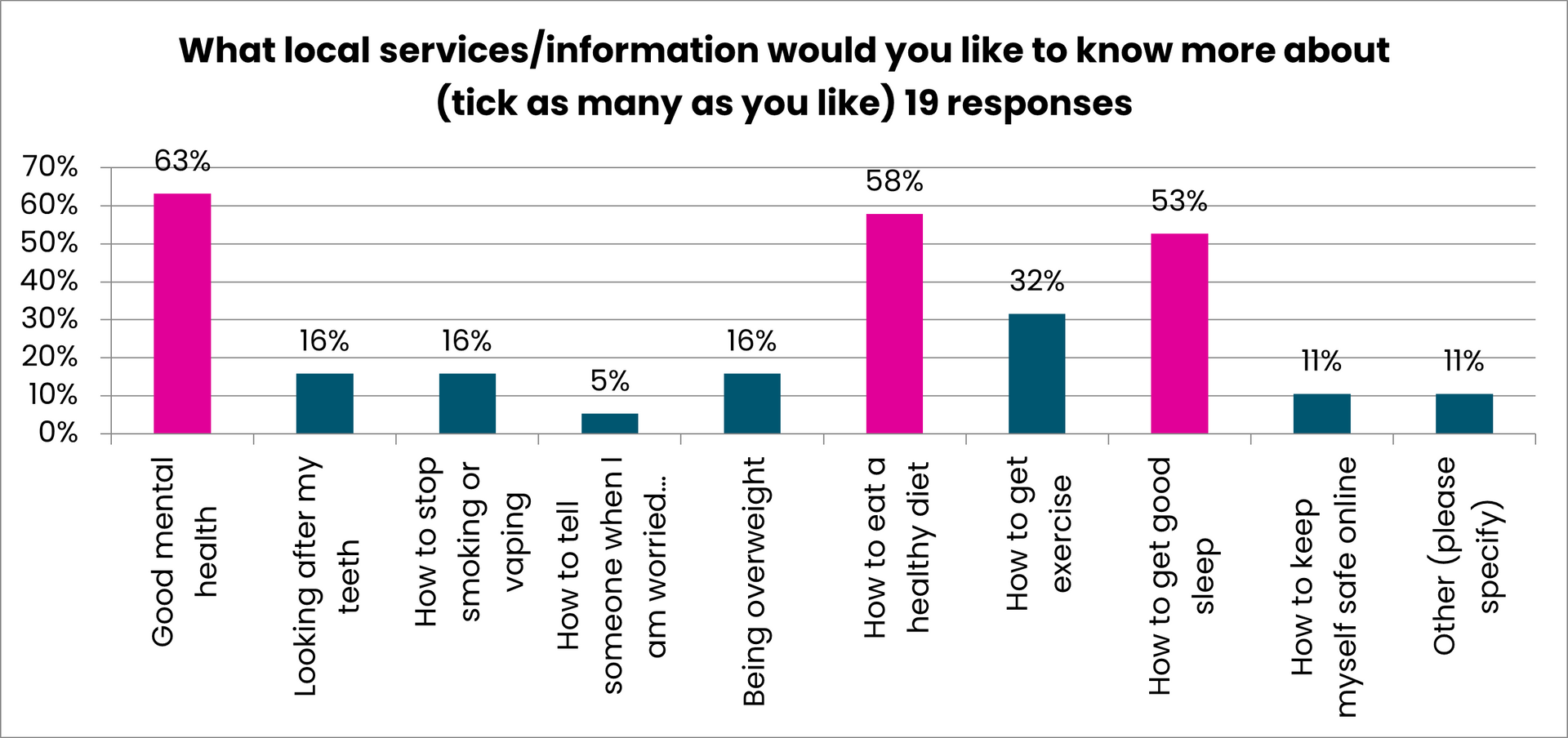
The survey was amended for a SEND transitional event at The Stoop in Twickenham to make it more accessible for young people with a learning disability. We also added in a new question about how they would like to hear the health messaging.
Mental health (68%), good sleep (65%) and healthy eating (58%) were key priorities for the respondents. In comparison to the young people at Kingston College Freshers Fair, online safety was less important.
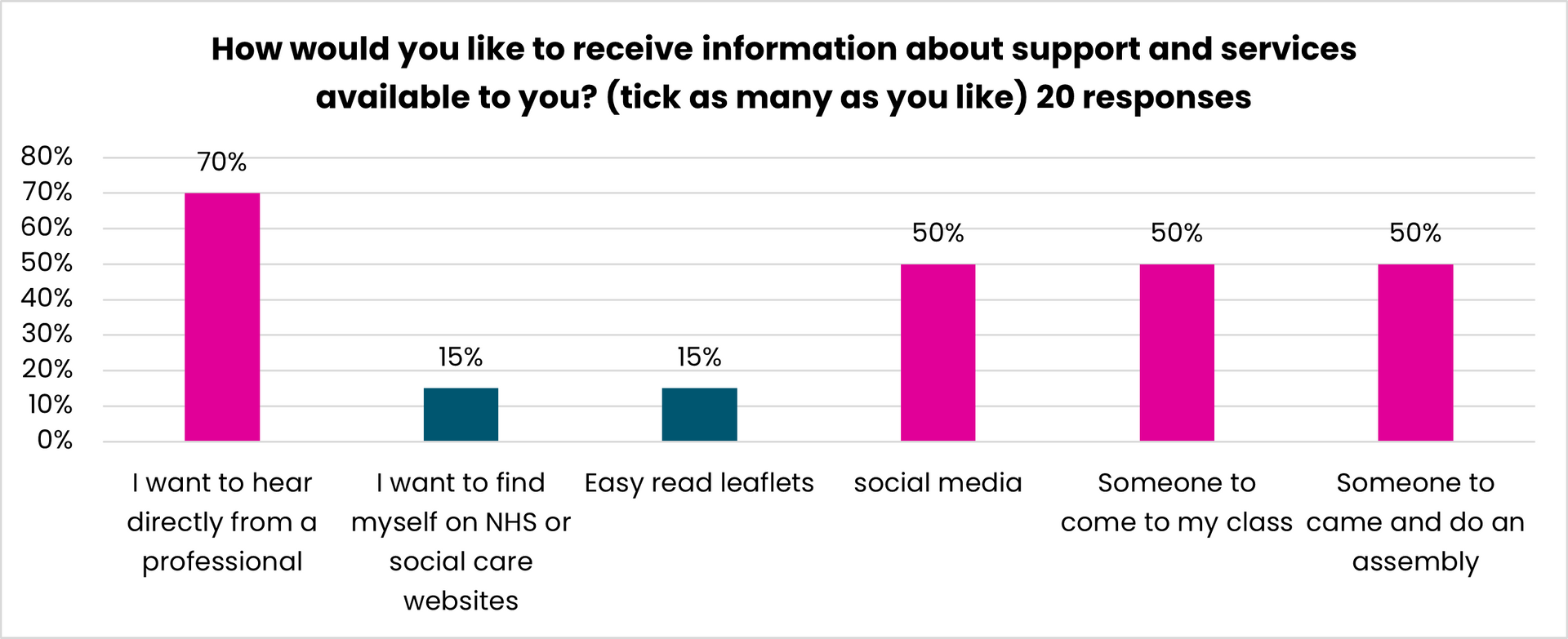
When we asked how the young people we spoke to would like to hear about support and services, hearing directly from a professional (70%) was the strong preference. Messages through social media, someone coming to their class, and someone coming to an assembly were equally weighted (50%).
The young people we spoke to had the opportunity to share feedback, explaining the motivation behind their answers. Explaining why they would prefer face to face engagement, hearing from a professional and their concerns around being online they said:
‘I want to hear from someone who knows.’
‘Can’t trust google.’
‘Probably come to me as I am not going to spend my free time googling that.’
‘A class is better so people feel free to ask questions’
‘Mandatory assembly, if its optional people wont go.’
‘I prefer a class so I can talk to them.’
What we heard in 2025
In 2025 we added more options for respondents based on feedback we heard in 2024. Good sleep (60%) and mental health (53%) were in the top three priorities again for subjects respondents would like to see promoted more but were joined by self-defence (60%).
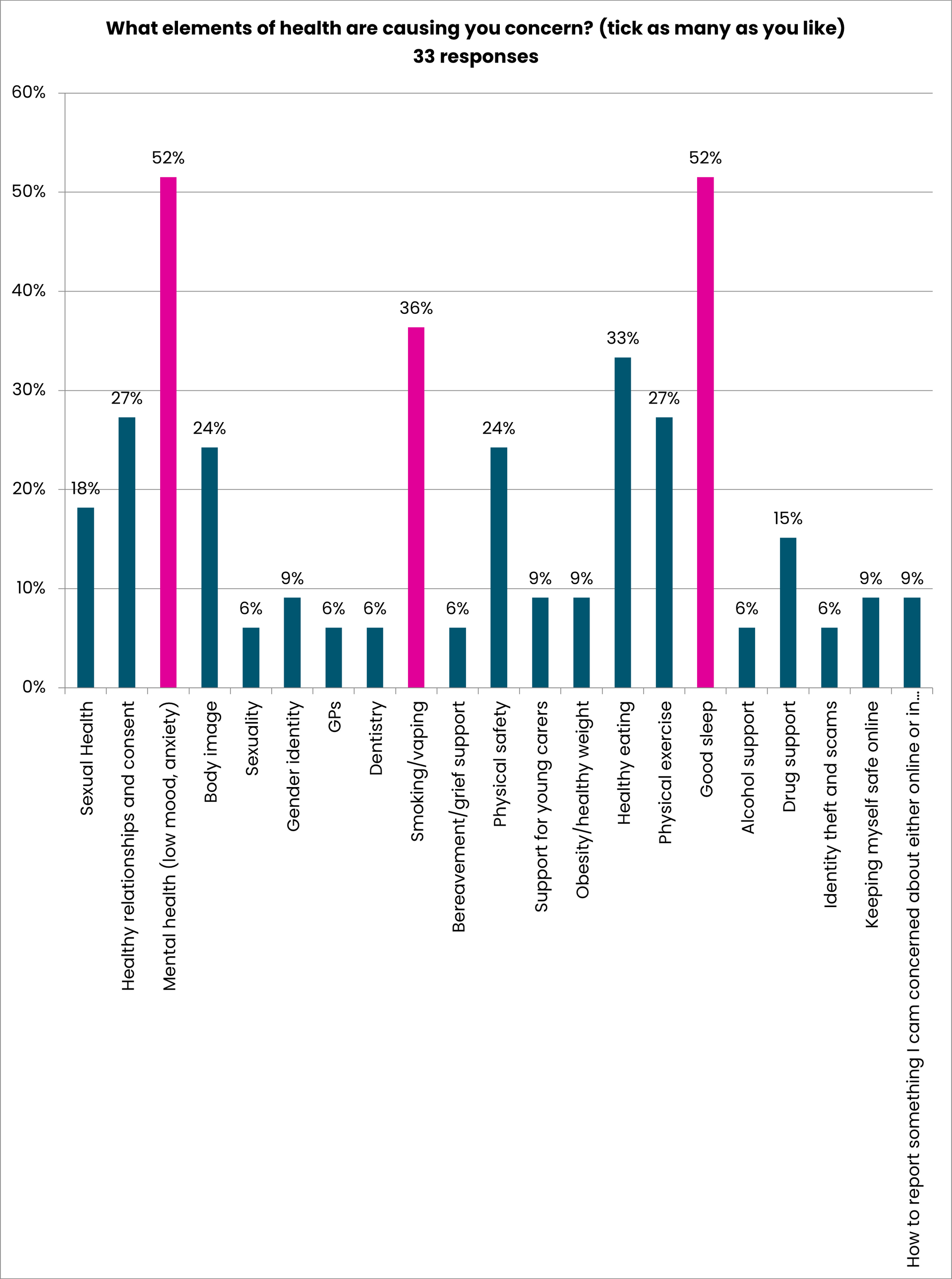
When we asked young people about their concerns, we heard that good sleep (52%), mental health (52%) and smoking/vaping (36%), were common worries. The discrepancy between what young people were concerned about and what they would like to hear more about suggests that they may feel that while some areas are a concern, like smoking/vaping, they have access to some information about these topics. Young people may feel like they have little or no information about self-defence and would like more, even though physical safety was less of a concern (24%).
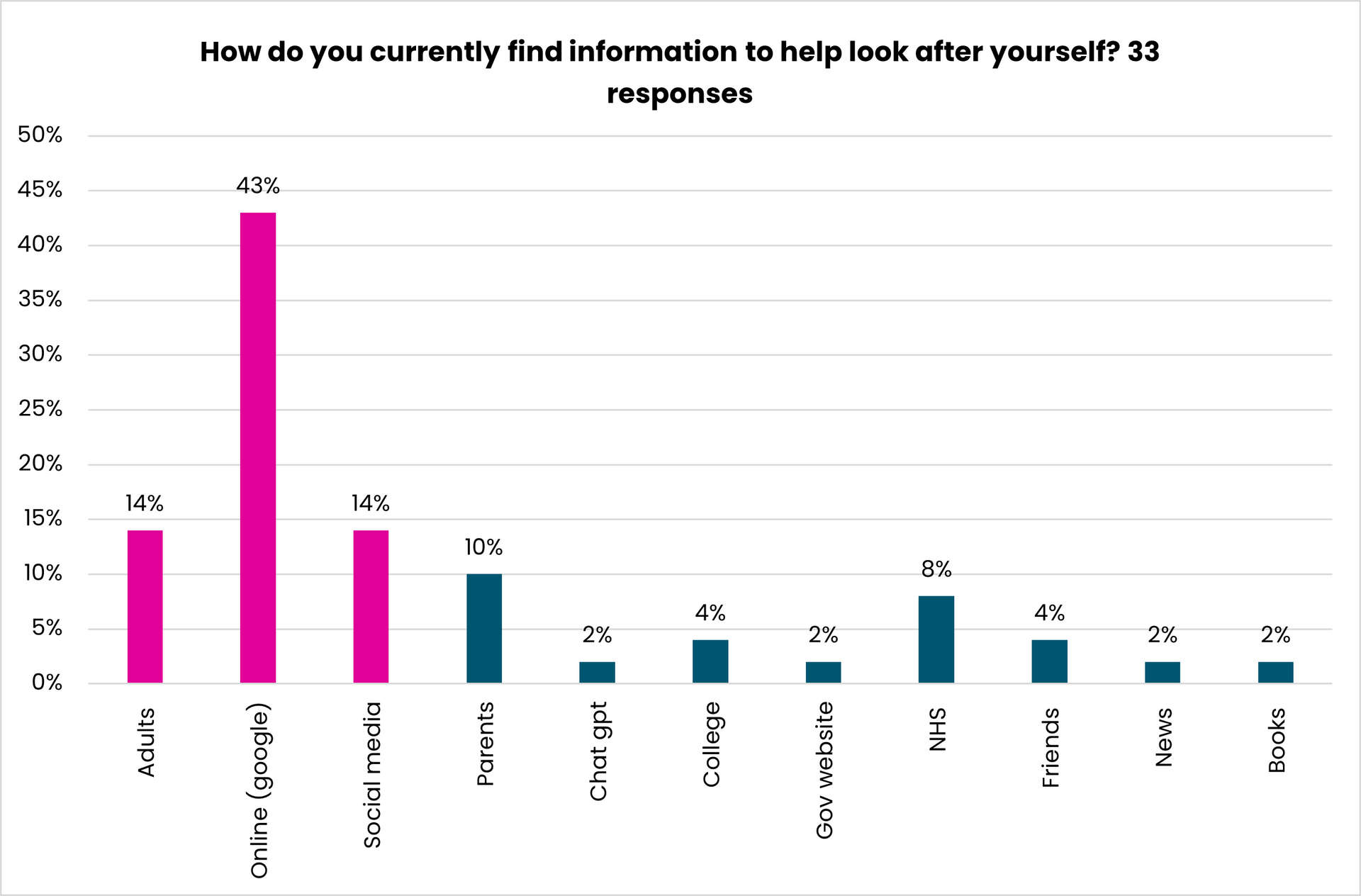
When we asked how young people currently find information to look after themselves, ‘Online (Google)’ (43%), was by far the most common source of information. Adults and social media were equally rated (14%).
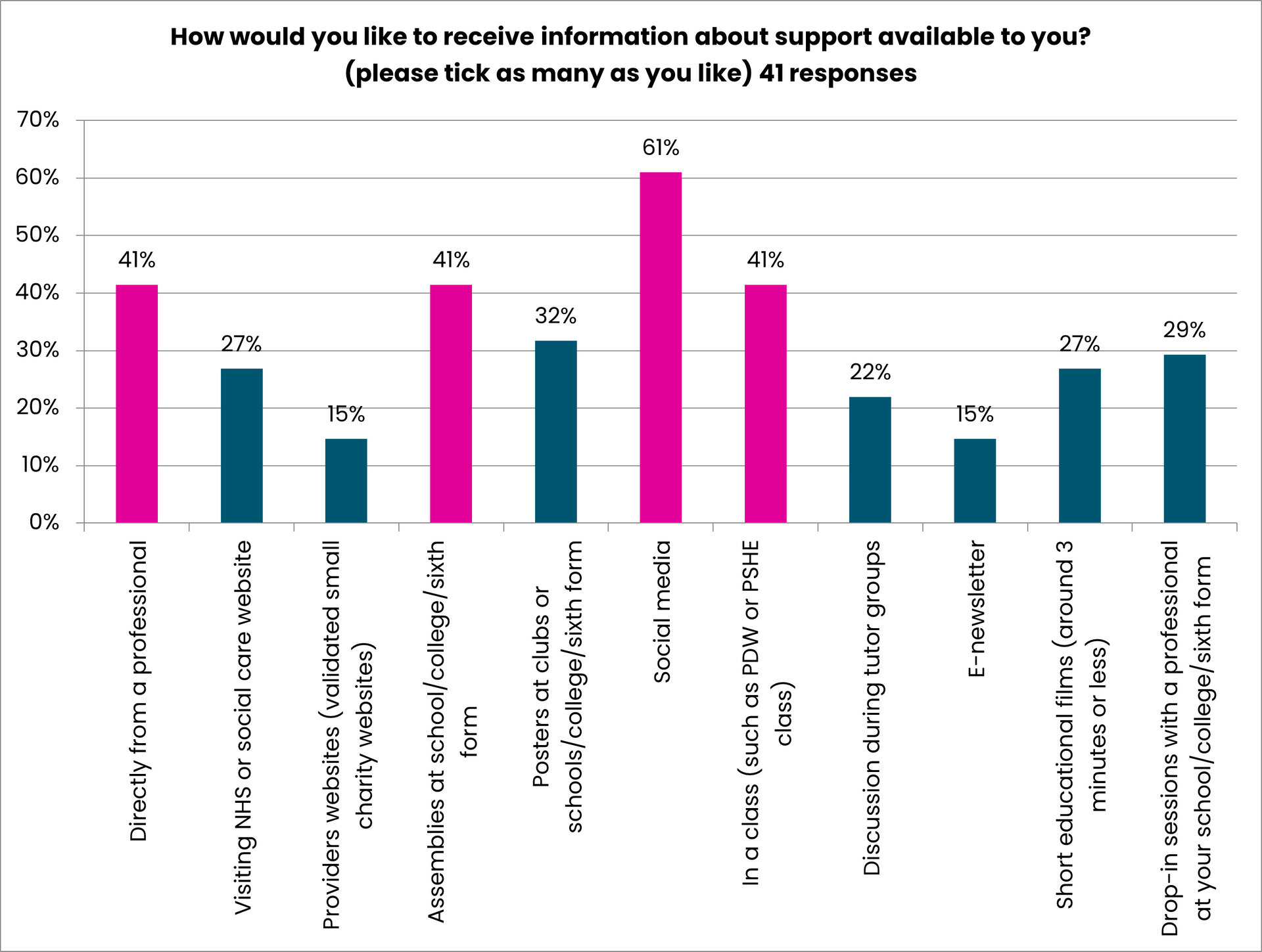
We also asked how young people would like to receive information. We heard that 61% would like to hear through social media compared to the 14% who do. This suggests that health services could do more to promote support and information on social media. There is also more to learn about which social media platforms young people would prefer to receive this information on.
Young people added the following comments:
‘Social media and posters in public places’
‘Post information online or assembly in college.’
‘People my age enjoy being on social media a lot and I think it’s a good and easy way to share information’
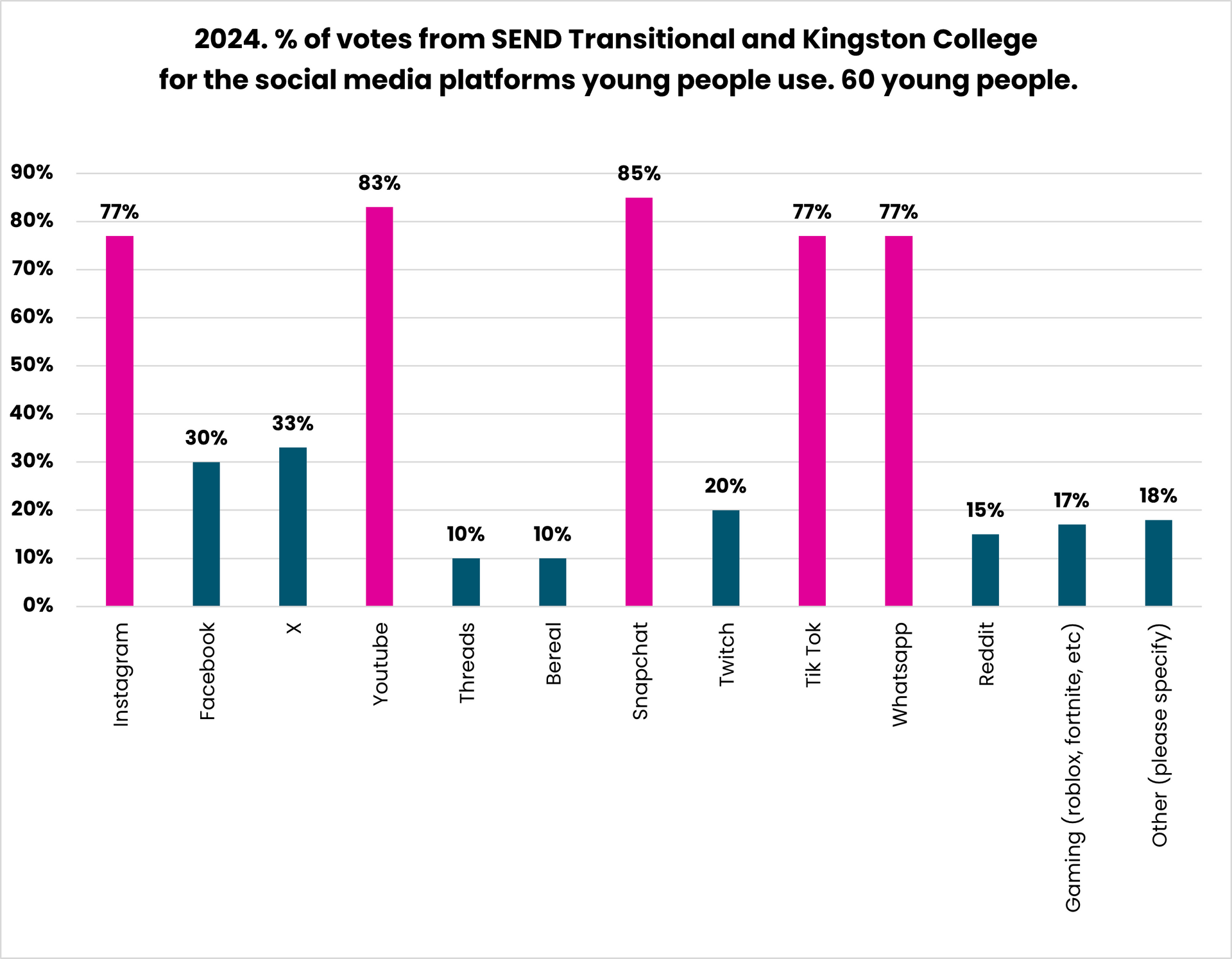
What social media platforms do young people use
Youth Out Loud! previously sought to understand the issues young people were experiencing with social media. As part of the research, we asked young people what social media platforms they use. This information could help health and social care professionals identify potential channels of communication. These platforms may not be the preferred platform for receiving information, but the chart below shows which social media platforms young people used most.
How do young people want to be engaged with
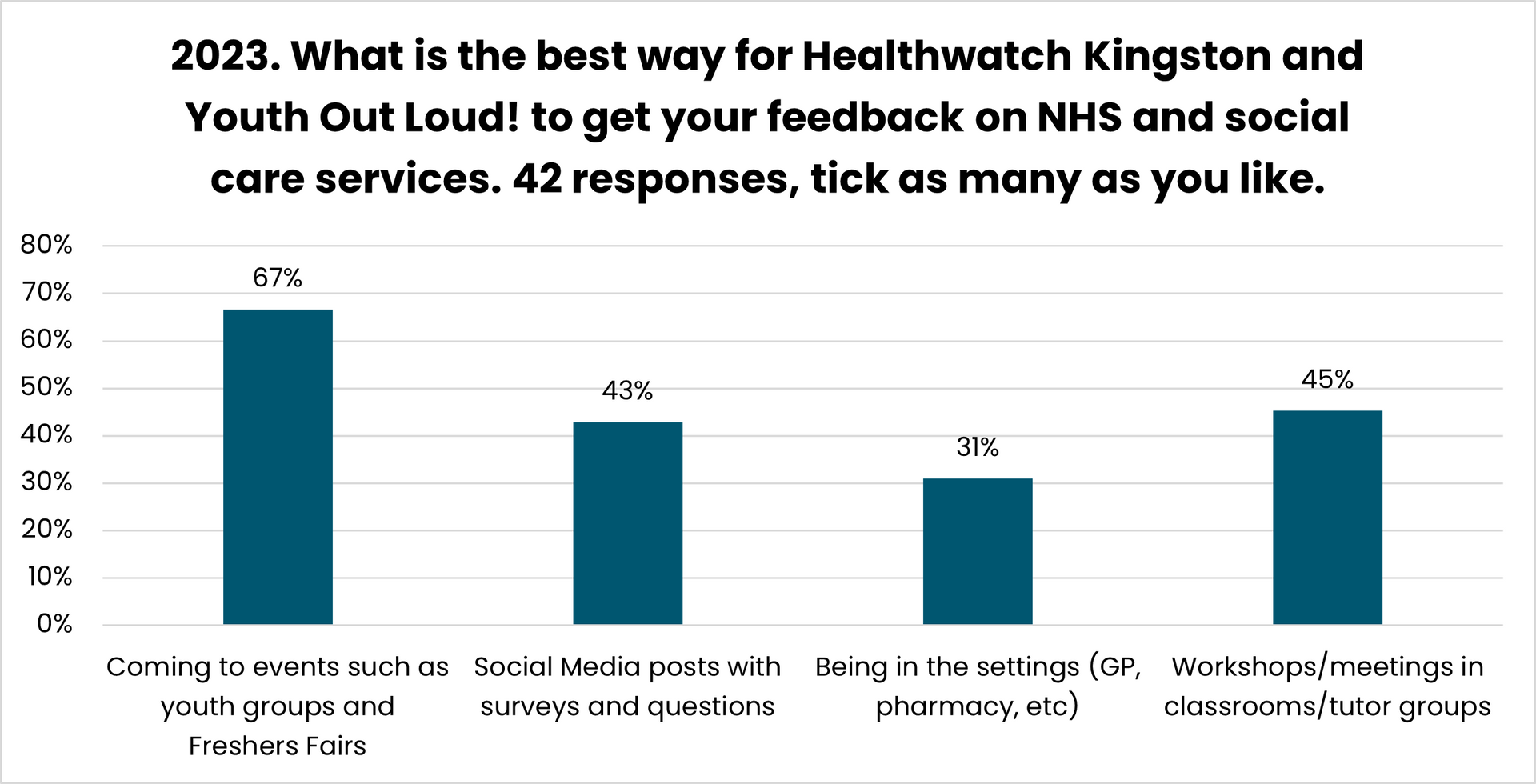
In 2023, we completed a separate piece of work on ‘Including Digitally Excluded’ and we asked young people how they want to be engaged with and how services looking to learn the perspectives of young people should approach them.
We gave them four options, three were face-to-face and one was online/digital. Overall young people preferred the face-to-face options, preferring for professionals to come to school or college or events like youth groups and freshers’ fairs. They were not against digital sources, but comments suggested this should not be the only tool used for engagement.
‘Use social media as a boost’
‘When you ask for comments on social media posts - most young people ignore it’
What could health messaging on social media look like?
On 11th May 2026, we met seven year 10 students from Canbury School to explain the work of Youth Out Loud! and ask how healthcare professionals could use social media to reach young people.
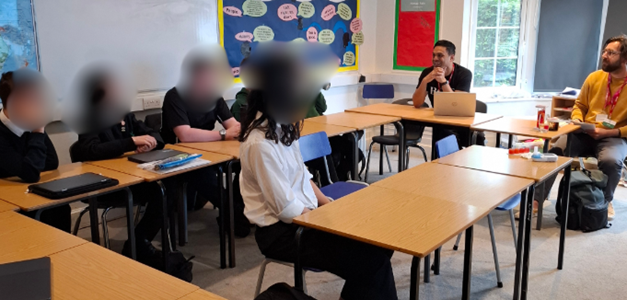
During the focus-group we asked:
• Which social media channels should professionals use and which ones should they avoid?
• What do you think health messaging on social media should look like?
• How can health and care services get their information to you (e.g. who can share their work, would you follow someone that shared health messaging)?
Which social media channels should professionals use and which ones should they avoid
One member of the group said they would google for information (which is current top answer for how young people get health messaging) and would not be looking on social media. The others said they would prefer tik-tok, youtube or Instagram. Tik-tok and youtube were their preferred channels. One student shared they would not use X.
One member of the group said that they would google information – which was previously the preferred method indicated in our surveys - and would not go looking on social media for information. The others said they would prefer Tik-Tok, YouTube or Instagram, and that Tik-Tok and YouTube were their preferred channels. One student shared that they would not use X (previously Twitter).
What do you think health messaging on social media should look like?
The group said they prefer short videos, possibly images you can swipe through or that move in a film, but something short and quick is better. The group had been shown. One video was a minute long and they said this was fine.
The group also shared that it was useful when the account sharing a video is populated with content as they prefer to land on a page that has more than one post.
‘Having a portfolio is key’
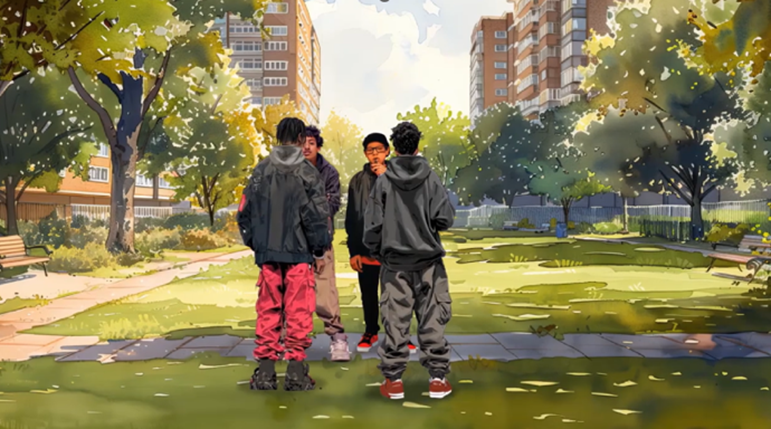
The group said they preferred animated videos over videos with real people. The group really liked an animated video, seen below that Ctrl-Z had shown them previously.
How can health and care services get their information to you?
We wanted to understand how someone who creates health messaging content can reach young people on social media. The students suggested tagging a video so it appears in their algorithm as they would not actively search for content around health messaging.
When asked about internet searches, the group said if they needed help or were concerned with something they would typically begin searches with the phrases ‘how to…..’ and ‘why is….’. Health organisations may consider using these terms in their content to improve the chances of search engines displaying their content in response to young people’s queries.
Date published: May 2026